
Emergency & Hazardous Tree Removal in Billings, MT
Need emergency tree removal in Billings, MT? Get help with fallen, leaning, split, damaged, and hazardous trees taking over homes, access, or surrounding property
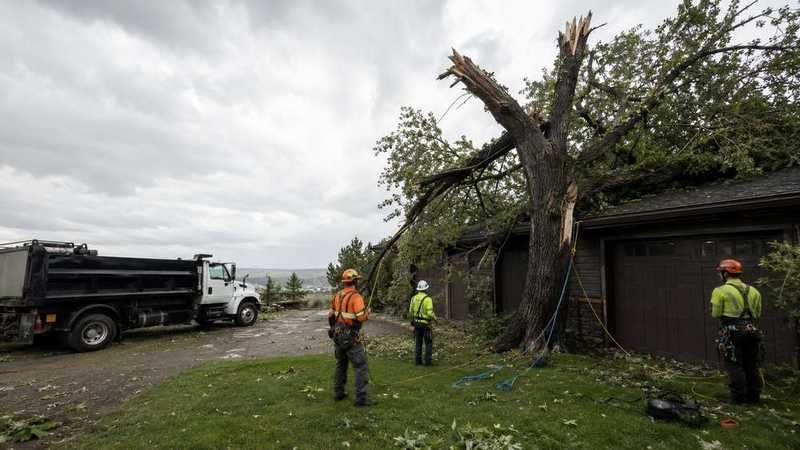
If a tree has fallen, leaned, split, uprooted, new lean, or has a large limb threatening your home, driveway, vehicle, or other use area, we are here to help with emergency or hazardous tree removal in Billings, MT. The planning for these types of jobs is based on the condition of the failed tree, the likely path of failure, structures in or around the fall zone, access considerations, and safe methods to control the hazard.
Do not attempt to assess a tree or branch that is contacting an overhead power line. Keep people away and contact the utility or emergency services first. Trees not contacting power lines should be assessed from a safe distance, and do not take pictures of the failure zone if you must enter it to do so.
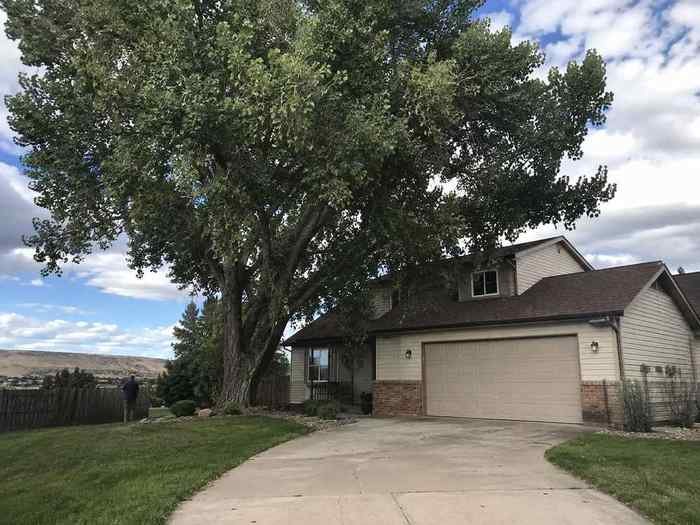 BEFORE
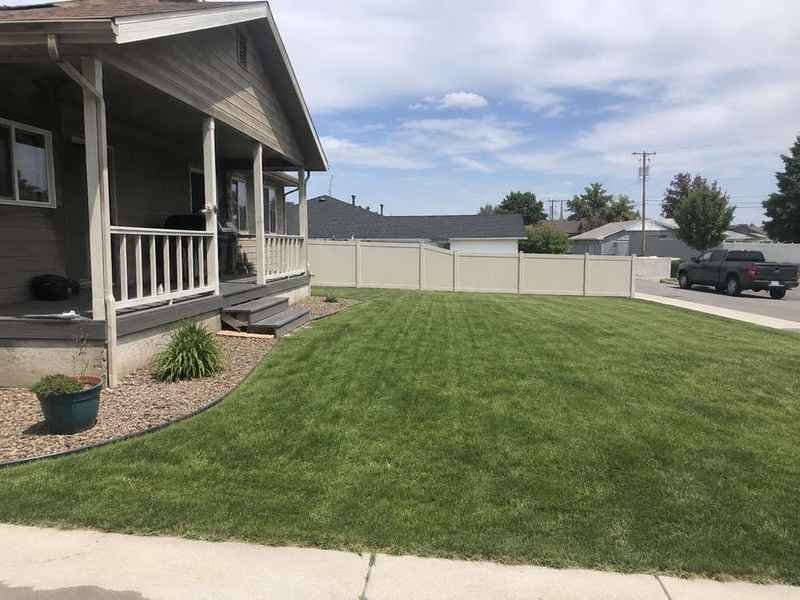 AFTER
AFTER
When Does A Tree Become An Emergency?
A tree emergency is actually more about timing than it is about the calendar. Trees that have failed or are likely to fail are often hazardous in ways that limit the options of removal to ones that require urgency. The focus of such jobs is on keeping people out of the danger zones created by the failing or failed tree, analyzing the failure potential and location, and picking the most controlled method of removal. Injuries are rarely the reason for these jobs, but they do play a role in making the removal more difficult.
Some of the trees that have damage are simply not candidate for immediate removal. Trees with old defects that have shown no failure potential up to that point, or storm-damaged trees that can be brought back into a safer condition with pruning, do not need to be removed right away. The jobs that need more urgent attention are the ones where the failure potential changes, the tree fails and puts itself into a dangerous place, or when the potential hazard zone includes structures or other objects that people use on a daily basis.

Hazardous Tree Conditions
Hazardous trees present a diverse set of challenges that are not always easy to address from one property to the next. Not only does the condition of a tree factor into the planning, but so does the value of what the tree is likely to contact if or when it fails. A defect in an isolated tree or one that fails into an open area is much different from one that is likely to contact a structure, vehicle, fence, roof, utility line, or other object.
New or changing lean
Trees that lean are not always hazardous, particularly if they have had a lean for some time. Tree leans that occur after wind events, root disturbance, or other changing factors, however, can be more concerning. Heaved soil on one side of the tree, exposed roots, and a visible opening in the ground at the base of the trunk are all good indications that the tree’s root system has been disturbed in some way.
Split trunks or other major cracks
Trunk cracks are often obvious indicators that a tree has a failure potential. While a tree with a small, low-level crack may not present many issues, trees with long or deep splits that see the wood grain pull apart at the hinge or along major unions are potential candidates for immediate removal. The location and depth of the crack are more important factors in planning than the overall appearance.
Dead, broken, or hanging limbs
Broken limbs that remain suspended in the canopy of a tree often look completely fine from the ground. What may appear as a stable branch with a clean break from the parent limb can be something quite different when examined closely. Broken or dead limbs should always be a consideration if they are close to a structure or another object, but deadwood over things like roofs, driveways, patios, and sidewalks should be a priority due to the increased risk.
Uprooted or partially uprooted trees
Uproupted trees are ones where a significant percentage of the root system has been physically pulled out of the ground. These types of trees often fail to provide the same level of stability once they have been uprooted, particularly if the failure has rotated the tree. Partial uprooting often results in a tree that leans at an angle but has been destabilized just the same. Uprooted trees typically need to be removed with controlled methods due to the altered center of gravity.
Hazardous trees are about more than just the tree itself, but include objects that the tree is likely to contact during failure.
A tree takes on the characteristics of its surroundings to a degree, and these characteristics play a large role in how each tree emergency is handled. A tree that leans over an isolated area can be a lower concern than one that presents the same defect near structures, vehicles, fences, or other objects. The objects themselves may even dictate the best course of action, such as if the tree must be dismantled in sections to avoid hitting power lines or other overhead obstacles. Things to consider before contacting us for tree service include roof lines, gutters, service drops, sheds or other structures, retaining features, neighboring properties and trees, and landscape beds or other plantings. Driveways, gates, and access to vehicles can also play a role, particularly if a tree must be removed in sections. Restricted sites often dictate that fallen branches be taken away or that trees be dismantled, lowered in sections, and removed. Such details must be reviewed before a plan can be built.
What Tree Work Falls Under Emergency & Hazardous Tree Removal?
There are many potential variations for jobs that fall under these categories. Hazardous tree jobs can range from complete removal to the selective removal of failed sections, and may include the removal of failed limbs, splitting and lowering a split trunk, removing a failed tree that has blocked access in some way, or even the partial dismantling of a tree too close to a structure to fell in sections
These jobs should have a clearly defined scope that includes which trees or sections are being addressed, whether stumps are included, what should be done with branches and logs, whether debris removal is expected, and what other work may be needed to make the property safe for continued use. Separating these elements is necessary for defining what is and is not included in any tree removal.
What Can You Expect From Our Hazard-Tree Removal Work?
Each job has to be handled with care, and hazard work is often about exposure and control, not just speed. Jobs of this nature should include an evaluation of possible movement and what it could contact while removing it, and should take into account the best ways to handle a failed or failing section without adding to the overall challenge
We will always try to separate optional work from hazard reduction and control. Stump grinding, additional pruning, and other storm cleanup tasks can be scheduled separately if immediate hazard reduction is necessary
We will identify debris-handling and access concerns before beginning work so the site is not left with large logs, brush, or other materials blocking the way after the immediate threat has been addressed
How Tree Hazard Removal Jobs Are Planned
Information from the owner
The first details we need from you are basic identifiers that tell us what kind of job this is. We need to know what has changed, when it occurred, whether the tree is still standing or has failed already, what it is near, and if you are concerned about access being blocked in any way. We may ask for pictures of the issue area, but do not attempt to take them if you need to be in an unsafe place to do so
Tree and site inspection
The tree and the overall site are both important factors that go into planning for these jobs. Details on the tree include defects in the trunk, root disturbance, damage to the canopy or other limbs, and changes to the lean. Other considerations include the height of the tree, work space, slope of the land, structures, power lines, and where branches and limbs will need to be placed when they come down
Work-zone and removal planning
Next is the planning to separate the failed or failing material from the rest of the site. This can include options such as climbing, access from above, rigging, or other controlled methods of removal. The best method of removal is considered for the job site rather than choosing one that works in general and applying it to every tree.
Removal of failed or failing material
Large branches and trunk sections are typically pulled away from the tree in a sequence that leaves the remaining tree as stable as possible. On restricted sites, the material may need to be cut into smaller sections and controlled to the ground rather than having a large limb fall freely. The failed tree or section must also be evaluated to see if the weight distribution will change as material is removed or if branches need to be taken in a specific order due to the risk of them falling on each other.
Debris handling and access restoration
After the main hazard has been removed, the focus turns to processing and cleaning up the remaining material. This can include chipping, cutting, or other methods of breaking up large roots, logs, and branches, and may also involve debris removal if the brush, branches, or other material is an issue in addition to the failed tree itself. Gaining access to the tree with equipment and the removal of such access hazards as gates or driveways should be restored if possible, particularly on sites where the removal of the failed tree has blocked the way
Can failed or hazardous trees be saved?
In some cases, yes. Trees with branch failures often have the potential to be hazard-reduced without removal, particularly if the defect is limited to one or more limbs and the trunk remains stable. The assessment will indicate whether there is enough live wood on the tree to allow it to be pruned to a safe condition
Preservation is often ruled out, however, when a trunk defect is involved or when root disturbance compromises a large percentage of the tree’s stability
A tree being preserved has less value for removal jobs, but it can be a preferred option when one is not immediately available.
Hazardous Tree Removal Near Structures & Buildings
When a tree emergency involves a structure, a significant part of the planning involves proximity. A tree that fails near a building often leaves a very limited work space between the fallen tree and the nearest structure. Large limbs cannot simply be dropped to the ground and have to be removed in sections, and large trunk sections may have to be left in the work zone until they can be cut into smaller lengths
Proximity also includes the work zone following the cutting or removal. A branch that comes down safely can create other problems if logs have to be pulled over a finished lawn, a large machine tracks through an unstable area, or if the removal blocks the only existing driveway. Work access and the work area are both important factors from the beginning of the job
Trees and Power Lines
Trees and power lines often have special considerations due to the hazard they present. NorthWestern Energy recommends that people stay at least 30 feet away from down or low-hanging power lines, and should always allow professional assistance to handle electrical equipment in any way that may reduce the risk of injury. If a tree is contacting power lines or if a power line is down, keep people away from both and contact the utility or emergency services before doing anything else
Working near power lines often has limitations, even when a tree is not physically contacting them directly. Electrical service to the site and the safe distance from equipment should be confirmed before choosing a method to remove the tree or its parts.
What About the Stump?
Emergency jobs often involve the removal of unstable tree parts, and the stump can usually wait unless it is presenting its own issues. While this can be a good option on sites that will not use the area for mowing, walking, or other regular purposes, a tree stump can also become a hazard to those who would mow around it or use the area for other reasons
Stump grinding is a separate service that usually has its own considerations for access and space. If stump grinding is something you will need, be sure to mention it when requesting work so the cost can be separated from the removal
Cleanup after Hazardous Tree Jobs
Cleanup should be outlined for the job, including whether brush can or should be chipped, whether all the large wood should be taken away or left behind, whether the chipped material should be removed along with the logs, and if there are special considerations for the area around the tree or stump. Hazardous tree jobs often involve a significant amount of material in a short time frame, especially if the tree had to be dismantled in sections and then removed
When a tree has failed, the cleanup may also involve restoring a driveway, gate, or other area if it was blocked by the tree or its parts. Tree and building repair jobs should also be separated if the tree failure resulted in any damage to structures
Documentation is a helpful reference for tree-related incidents, not a legal document
Insurance considerations are separate from the documentation, and tree-service providers should not make any assurances about coverage. When it comes to documenting the removal jobs, it is always good to record everything without assuming that the removal or cleanup will be covered by insurance
If you are dealing with a storm damage scenario or the damage to your property otherwise, basic documentation is always useful to aid the insurance claims process. Take pictures from a distance to show the tree and the condition of your property. Photograph all damaged areas, if possible, before other debris is removed if you can get to them without putting yourself in danger. Taking pictures from a roof or near a hanging limb or other unstable tree part puts you in danger without providing much additional insight
Documenting the Condition of Your Property
Write down notes on what changed and when you noticed the issue. If you have a picture of the tree before the incident occurred, that can also be a helpful reference for showing the change. From a distance, you should be able to note new leaning, soil disturbance, cracking, missing branches, and other changes in the tree. This should be a description of what you see rather than an evaluation of why it happened
Keep the area around the tree hazard-free and accessible if possible. People, pets, and vehicles should be kept away from potentially dangerous ground if it is possible to do so. Do not park beneath a tree with a limb that is likely to fall, and do not use a gate or driveway if you have to crawl under or through broken branches to get to it. If the tree has failed but failed on top of a structure, do not attempt to remove branches that are hanging over other areas just to allow a vehicle to pass through unless you know the branch is supporting the tree
What To Do While Waiting for a Hazardous Tree Evaluation
Keep people, pets, and vehicles away from the tree and the area it could reach if it were to fail further, including a wider radius if wind or additional weather is expected. Treat leaning, cracked, or partially fallen trees as unpredictable; the outward condition does not always reflect how much longer the remaining wood or root structure can hold.
Avoid attempting to cut, pull, or otherwise move any part of a hazardous tree yourself, and do not try to remove debris that is resting against or tangled in the unstable material. If the tree is near a structure, driveway, or walkway, block off or avoid that access point until it has been evaluated. If you notice new movement, cracking sounds, or the situation appears to be worsening, move further away and contact us so the evaluation and any needed work can be prioritized accordingly.
What Determines the Cost of Emergency Tree Removal Jobs?
There is no good rule of thumb for pricing jobs that fall under “hazardous tree removal” because each tree issue has site-specific considerations that add to the complexity
- Tree height, trunk size, and canopy spread
- Whether it is standing, leaning, hung up, or down
- Soil, root, and trunk defect concerns
- The distance to objects like structures, vehicles, fences, power lines, and nearby trees
- The work area and likely drop zone
- Climbing, access from above, and other specialized methods
- Slope, gate size, driveway access, and ground condition concerns
- The amount of brush, logs, and debris to chip, remove, or process
- Stump grinding and other specialty services
- Time factors or if the job can wait to be scheduled
Emergency Tree Removal in the Billings Area
Billings and the surrounding Yellowstone County area are prone to high winds, heavy snowfall, and severe weather that can lead to broken tree limbs and other damage to trees that may leave them hazardous to nearby structures. Local conditions and hazards are often factors in determining exactly what should be done about a failing or failed tree, but the conditions often uncover preexisting defects that should also be addressed in order to prevent further issues. After severe weather events, new leans, soil disturbance, fresh cracks, hanging branches, branch failures at unions, or limbs and branches that took abnormal positions during the event should all be noted
If the damage is widespread across the property and the focus is more on branches, logs, and debris cleanup following the storm, the Storm Damage Tree Cleanup page would be a better fit for an initial request. If a single tree has failed and presents an emergency, the Emergency & Hazardous Tree Removal page is the right choice
Use the form below or call to request assistance with a dangerous, leaning, fallen, split, or otherwise unstable tree in the Billings area.
Frequently Asked Questions
What qualifies as emergency tree removal?
Emergency removal involves trees that threaten people, buildings, vehicles, roads, or utilities.
What should I do if a tree falls on my house?
Keep people away, avoid power hazards, document damage if safe, and contact professionals.
Can a dangerous tree be saved instead of removed?
Some trees can be treated, but unstable trees may require removal.
How quickly should hazardous trees be removed?
Immediate hazards should be inspected and handled as soon as possible.
Are storm damaged trees dangerous?
Yes, damaged branches, cracks, and weakened roots can create hidden risks.
Request Tree Service in Billings, MT
Call for tree service help or use the estimate form on our Contact page. See Storm Damage Tree Cleanup for widespread branch and debris cleanup after severe weather.
Get a Fast, Free Estimate
Tell us about the job and we will get back to you.