
Tree Removal in Billings, MT
Tree removal in Billings, MT for dead, damaged, hazardous, storm damaged and unwanted trees. Request services including cleanup, stump grinding, pruning and related tree work.
Need a tree removed in Billings? We offer professional tree removal services for dead, damaged, unstable, storm-damaged and unwanted trees, with the focus on the tree’s impact on the surrounding area, not just the trunk. Before removal, we review the tree’s location, condition, nearby structures, fences, access, utilities, work zone and options like stump grinding. Our complete tree service includes emergency and hazardous tree removal, tree trimming, pruning, stump grinding, storm damage cleanup and land clearing for qualifying customers in Billings and nearby areas. Let us know what is happening on your property and what you would like to see after the work is done and we will identify the right scope and next steps.
Common Reasons Trees Need to Come Down
Removals can be necessary for the following situations:
Dead or Dying Trees
Trees with significant dead branches or crowns, decay, dieback, or other damage may have limited ability to recover. While dead branches fail first, the root system or trunk can impact the overall stability of a tree. Tree removal can be the safest option when the risk or potential consequences cannot be reduced through pruning or other work.
Unstable, Leaning, Split or Injured Trees
While some trees naturally lean, movement can indicate other issues underground. New leans or increases in existing ones, along with root exposure, trunk splitting, large cracks or splits, stem damage, or broken or split branch attachments, may require a closer inspection. The value of the tree should also be reviewed in context of where it is located and what could happen if it fails.
Trees That Conflict With Property Plans
Trees can also be removed when they are failing or healthy but will conflict with the planned use of the property. This can include a tree that is growing into a building footprint, blocking access, impacting hardscape and structures repeatedly or preventing a project from being done at all because of the location and size. Conflicts should be reviewed in context of tree value, project needs, structures in proximity and work zone limits once the removal is done.
How to Decide Whether a Tree Really Needs to Come Down
The simplest approach to consider when it comes to tree removal is why the tree needs to come down. If the cause for removal is a few dead branches, limb clearance, the weight of those branches or a broken, crooked or injured area of the canopy, it may be possible to prune the tree back and leave it standing. However, if the trunk, roots or main structure of the tree are compromised it is likely to be safer and more cost effective to proceed with removal. This applies to trees that conflict with a structure, such as a house, garage, driveway, fence, utility corridor or building footprint.
Before scheduling removal, it is a good idea to note what is visible from the ground, including dead areas, mushrooms, cracks or cavities on the trunk, leaning or shifting, exposed roots, broken branches or any damage from wind or weather. Avoid climbing an injured tree to inspect it. Any tree that contacts overhead power lines or has contact with a line should be treated as a utility emergency and not as a normal tree removal.
Explore Our Tree Services
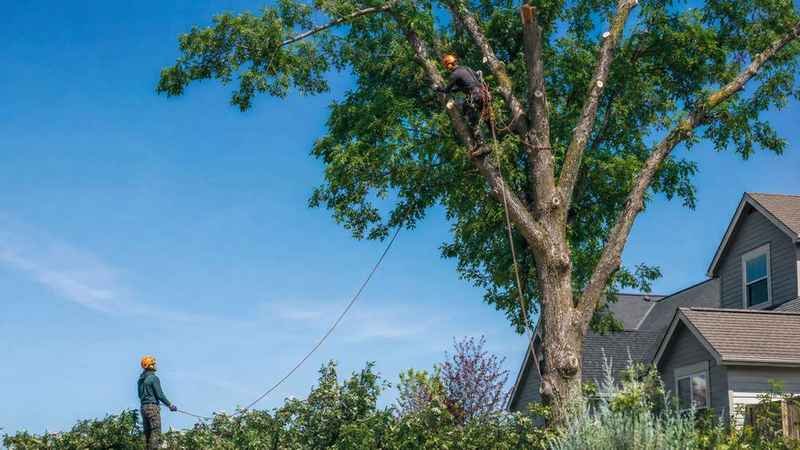
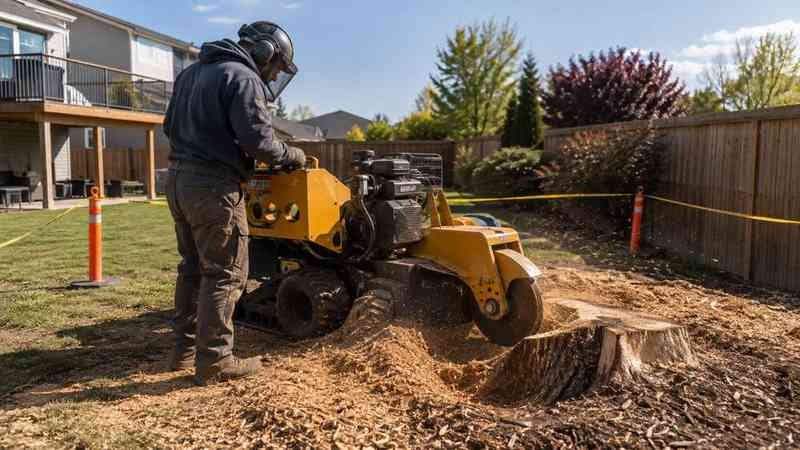
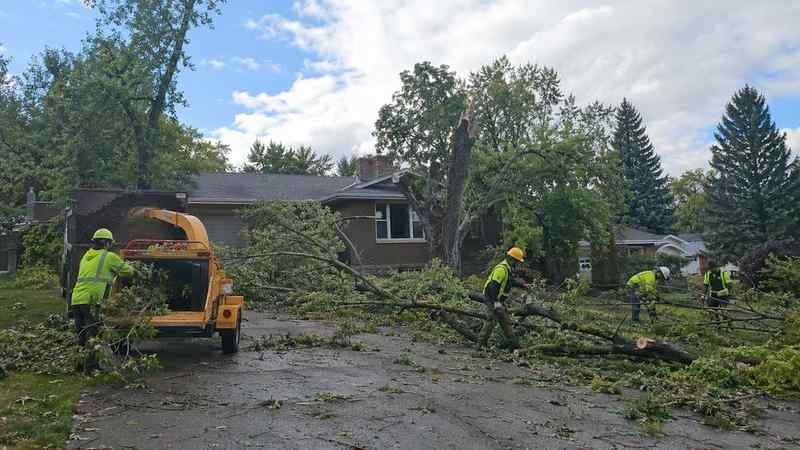
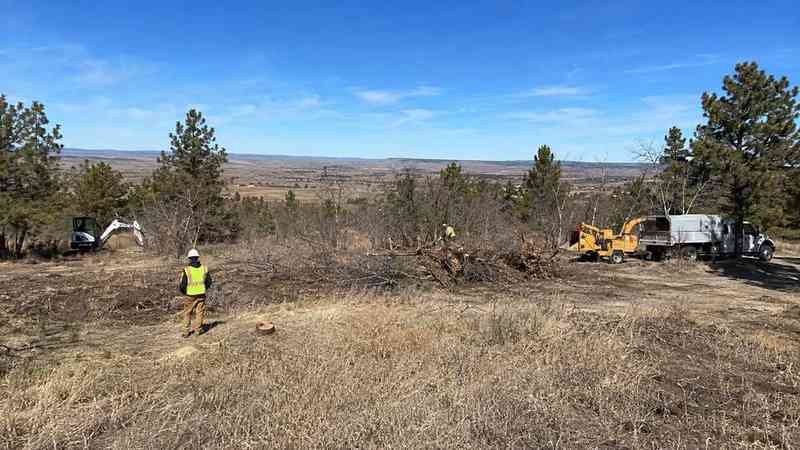
Tree work does not always fit a simple category. The following services are available to support tree removals and other related needs, each addressed individually since every type of work carries different requirements.
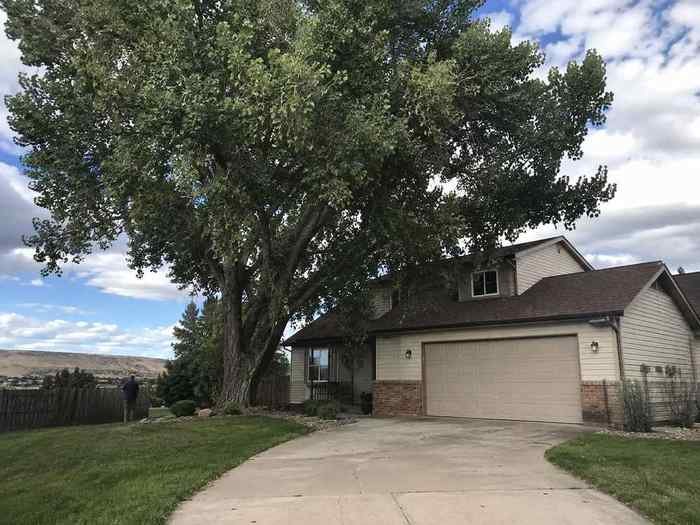
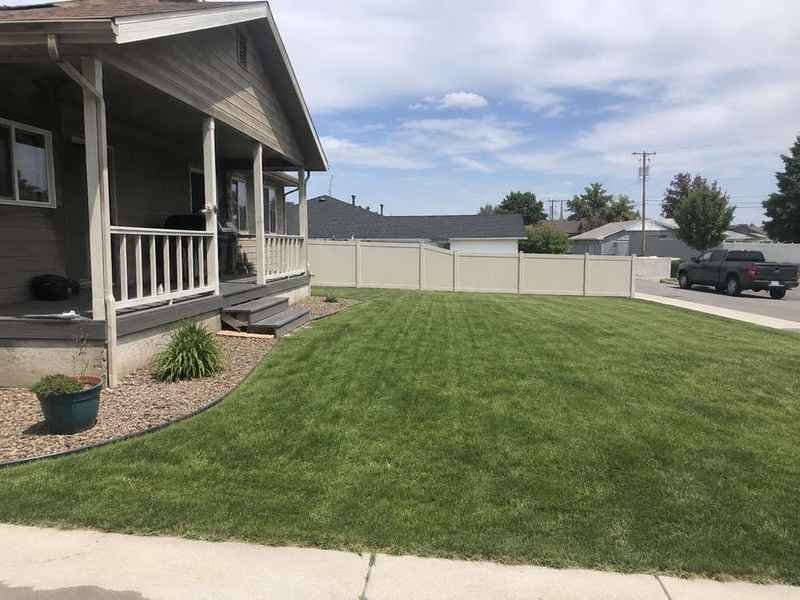
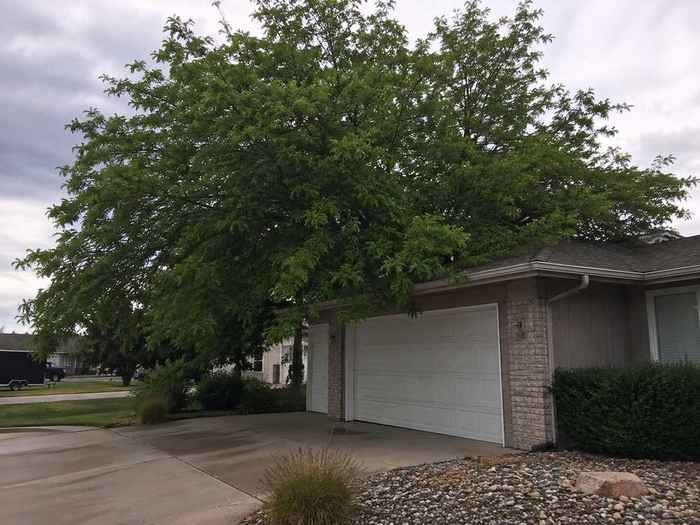
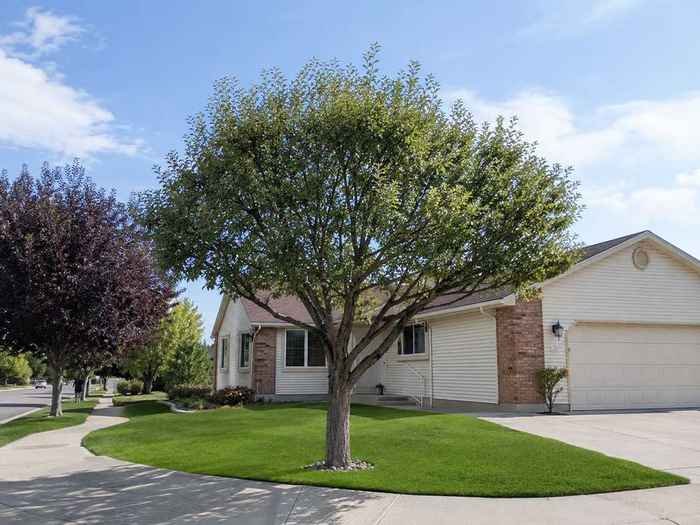
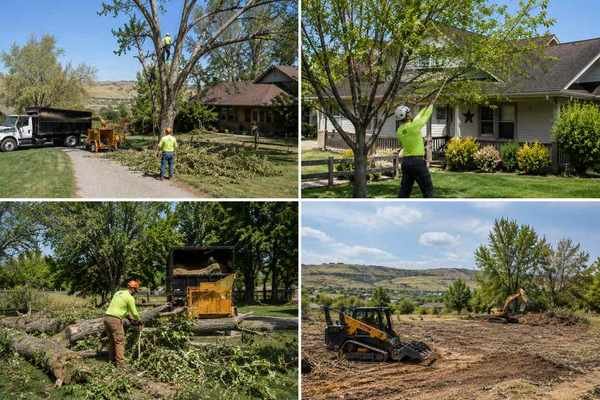
See the Results: Before & After
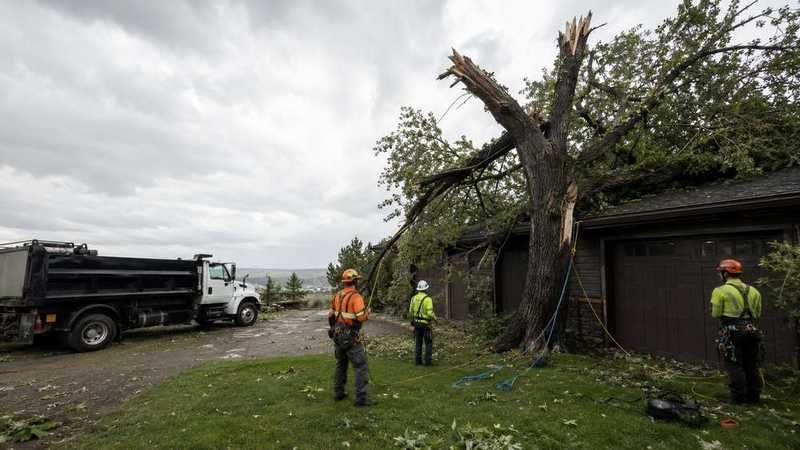
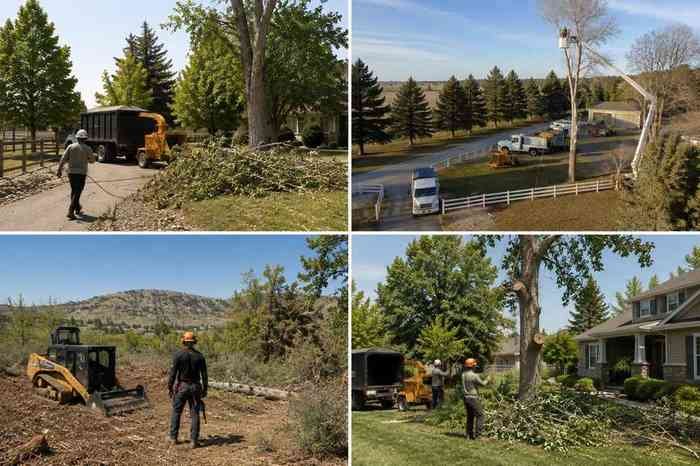
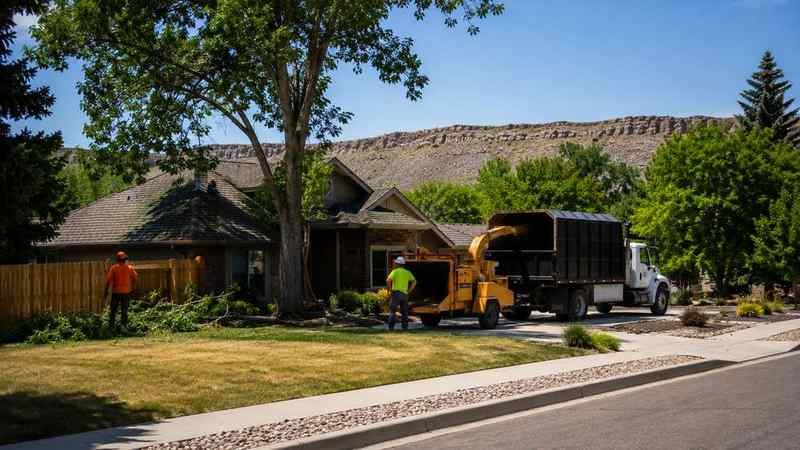
A look at real outcomes from recent tree removal and trimming jobs in the Billings area.
Why Choose Our Tree Removal Service Approach
Tree removal services are not just about cutting. We recommend the full scope based on the tree, the area and the desired outcome after the work is done.
Planning That Considers the Property
Tree removal can involve a variety of factors that impact the work, including structures, garages, fences, driveways, landscaping, vehicles, the adjacent property, overhead obstacles and access for trucks or other equipment. Property considerations affect not just where the tree goes but often how it is removed.
Controlled Removal When Space Is Limited
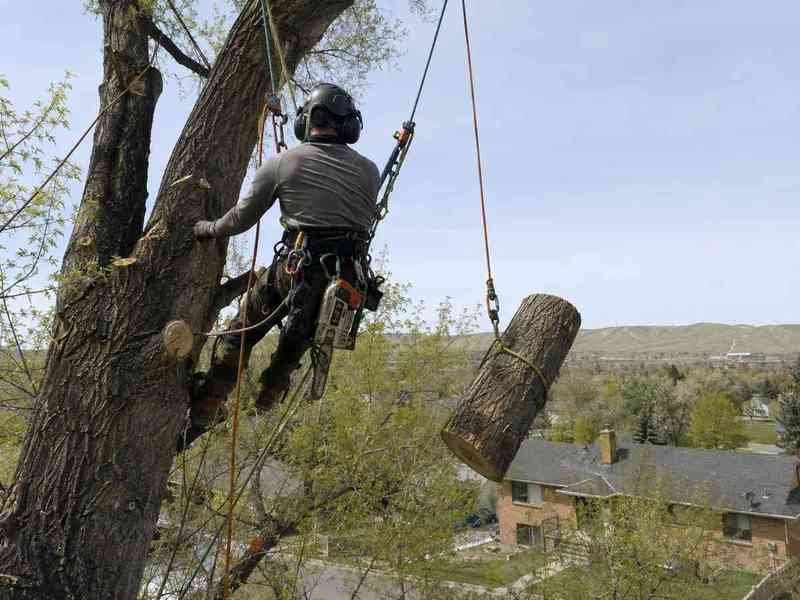
Jobs that have little or no open space for a tree to be placed or contained may need to have the tree dismantled in place using climbing, aerial access or other methods.
Clear Cleanup Guidelines
Branches, logs, chips, stump grinding and haul-away often play a role in the overall removal cost, since they can extend the time the team spends on the job. Controlling expectations beforehand helps avoid the concern that a job has finished when wood and debris still need to be raked up.
One Request for Connected Tree Work
Jobs that combine tree removal, stump grinding, storm cleanup, pruning and land clearing benefit from having each task identified separately, rather than forcing a single job into one category just to make it fit.
How Our Tree Removal Process Works
The process can vary by job, but tree removal typically works through the same general steps, considering the tree, the surrounding area and the intended outcome after removal.
Tree and Location Assessment
We review more than the tree itself because a tree rarely exists on an isolated piece of ground. Tree size, condition, lean and crown shape, broken branches, root structure, nearby buildings, fences, vehicles, overhead obstacles such as power lines, slopes, gardens and gates, and available space all influence the work.
Removal Planning and Work Zone Setup
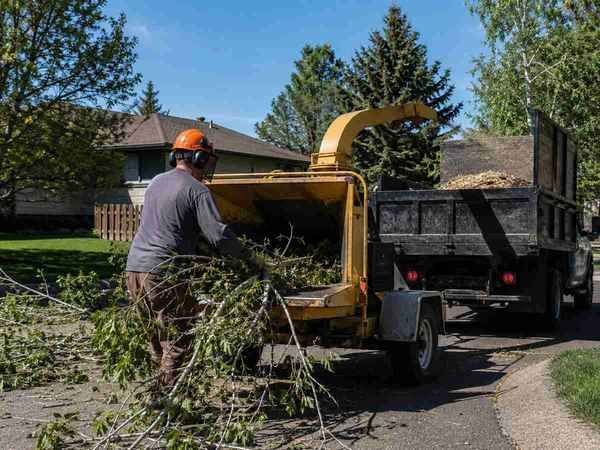
We identify the work zone and where materials and debris can be placed, including space for chipper trucks or other equipment, and how the team will access the tree based on obstacles and available space.
Controlled Removal
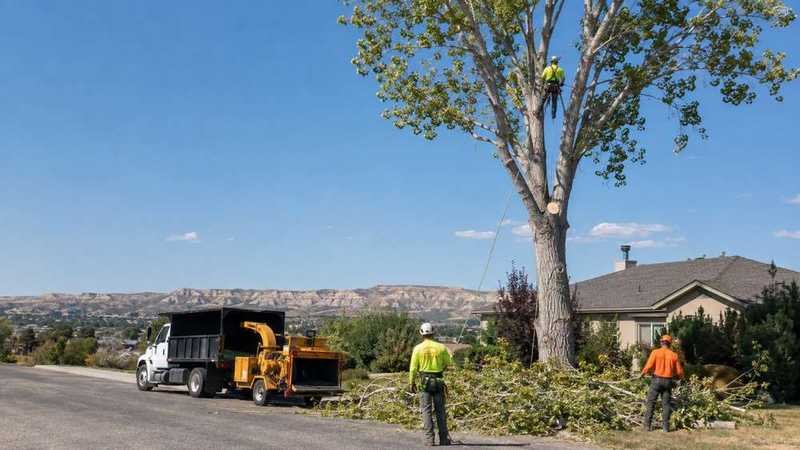
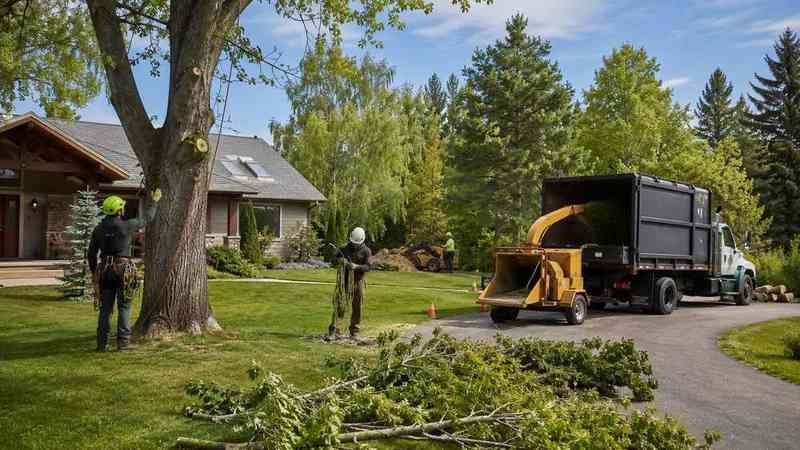
Tree removal can be done in a variety of ways, based on the tree, the project and the work zone. Large trees or ones in limited space may benefit from being taken down piece by piece using climbing and aerial access, with heavier sections rigged down in controlled ways.
Wood and Debris Handling
Once branches are off the tree and the trunk is on the ground, the focus shifts to material handling, including chipping, cutting logs, and removing debris from the work site in accordance with the agreed-upon cleanup guidelines.
Final Cleanup and Stump Options
We do not consider the job finished until the desired cleanup has been completed to your satisfaction. The stump can be left standing or removed at a later date, depending on the scope requested.
Good to Know: Site & Safety Details
A few practical details that often come up once we start planning a removal.
Removing Trees Near Homes, Fences, Driveways and Tight Spaces
The closer a tree is to something that cannot simply be moved, the more the job is impacted by both space limitations and the value of the items nearby. A large tree close to a roofline, garage, driveway, retaining wall, fence, garden or adjacent property has a significant impact on removal options.
A tree in a confined space may need to be dismantled to be removed, particularly if there are overhead obstacles involved. Tree removal on slopes or over lawns and other delicate plants may also be done in pieces rather than waiting for the tree to fall or be bucked on the ground. Gates, the width of a driveway, lawn conditions, irrigation, slopes, delicate plants, parked vehicles and other obstacles all have an impact on the removal process. Mentioning these constraints when the job is requested can have a significant impact on the timing as well as the method.
Power Lines and Utility Safety
Tree work near power lines is always a serious concern. NW Energy recommends that people should avoid removing a fallen tree that has contacted a power line and should keep people and animals away from a tree that is touching a power line. If a tree or branch is in contact with a power line, treat it as an electrical hazard. Contact NW Energy or local authorities for help regarding the tree or branch. Do not assume that a tree or branch that has contacted a power line is de-energized.
Other utilities to consider include underground lines, especially when stump grinding is requested. Trees near utility lines should be reviewed carefully before excavation, pruning or grinding begins.
What Happens to Branches, Logs, Wood Chips and the Stump?
Cleanup can be a major factor in determining what type of tree service is needed. Be sure to confirm what happens to different materials before the job begins. Small branches can often be chipped, while larger logs can be cut into smaller pieces or removed, depending on customer preferences and what the service provider can do. Sawdust, small twigs, and other materials may need to be raked up if the cleanup guidelines specify that they should not be left on the lawn.
The stump is a separate consideration. Leaving it alone can be the most cost-effective option when the tree is far from any intended use, but a stump can also be nearly unusable if it fails, interferes with a garden, lawn or parking area, or restricts work on a home improvement or other project. Stump grinding is a good option to consider when the stump needs to be removed in order for the removal to truly be finished. Grinding typically does not remove the entire root system, so future work should be reviewed in conjunction with the grinding scope.
Local Knowledge: Billings-Specific Considerations
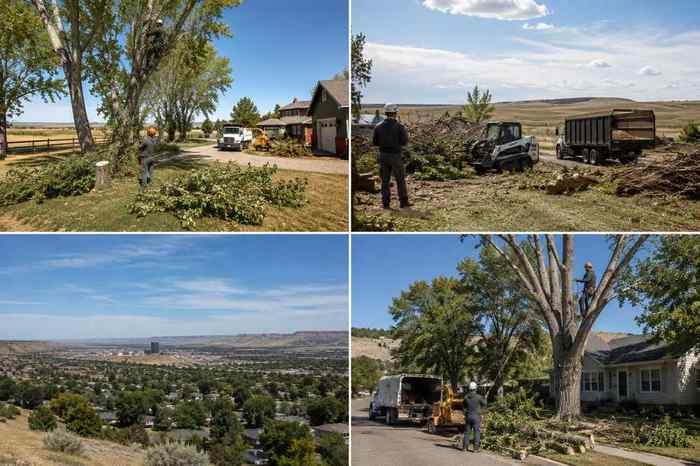
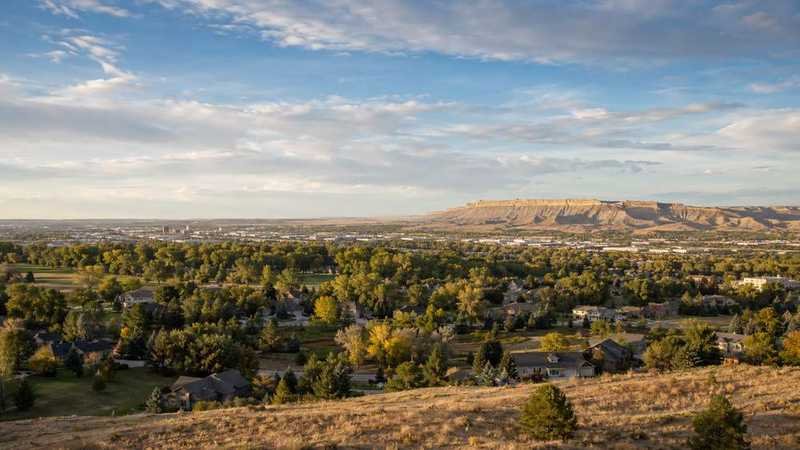
Residents in the Billings area have many of the same tree concerns as in other regions but also have a few unique considerations. High winds can lead to broken branches, failure in some trees and widespread damage across the area. Billings has had several major weather events that have impacted trees, including the community cleanup efforts after the 2024 storm that affected much of the area.
Billings is also home to a large number of trees, including many within the developed urban area. The Parks & Recreation department cites approximately 10,000 trees within Billings’ parks and notes that ash, blue spruce and cottonwood tend to be the dominant trees within the developed area.
Trees can interfere with the work being done on a private property, but those in public rights-of-way have additional considerations. Billings Public Works provides a free Boulevard Tree Planting/Pruning/Removal Permit to help residents understand the options available to them before attempting to trim or remove a tree that is planted on city-owned land.
What Affects the Cost of Tree Removal?
The cost of tree removal always ties back to the tree and the location, but the reasons for removal and project-specific constraints have a major impact as well. National tree service guidelines as well as local competitors agree that size, location, access and project-specific considerations are major influences on cost:
- ✓ Tree height, trunk size and canopy spread
- ✓ Tree condition, rot, cracks or other indications of failure
- ✓ Lean and potential direction of a lean
- ✓ Proximity to other structures, buildings, vehicles or obstacles
- ✓ Open space or work zone for staging the removal
- ✓ Gate size, slope, access or other limitations
- ✓ Need for climbing or other access and removal equipment
- ✓ Amount of brush, branches, logs and other materials that need to be moved or handled
- ✓ Log and chip disposal costs or options
- ✓ Stump grinding as a separate concern
- ✓ Time sensitivity and special considerations for hazardous jobs
It is not always possible to give an average price for tree removal or even a range of prices that might apply. The most useful approach is to provide details about the tree and the property so we can give an estimate that fits the specific job — share the tree size and approximate height, the condition of the tree, nearby structures, gate sizes or access limitations and whether stump grinding is being considered when making a removal request.
Tree Removal Service Areas Around Billings
The website is organized to help customers in the Billings area find relevant information without forcing them to sort through options for other nearby areas. Tree removal can be requested within Billings, as well as surrounding communities. Each location has its own page to help with questions and concerns specific to that area.
Frequently Asked Questions
How much does tree removal cost in Billings MT?
Tree removal cost depends on tree size, species, condition, location, access difficulty, safety risks, and whether cleanup or stump grinding is included.
How do I know if a tree needs to be removed?
Signs include severe leaning, cracks, root damage, dead branches, decay, disease, and trees threatening homes or structures.
Should I remove a tree leaning toward my house?
A leaning tree near a structure should be professionally inspected because wind, snow, and root failure can increase the risk of falling.
How do I choose a reliable tree removal company?
Look for insurance, experience, written estimates, safety procedures, and clear information about cleanup.
Is tree removal covered by homeowners insurance?
Coverage depends on the policy and the cause of damage.
Can I remove a large tree myself?
Large tree removal can be dangerous because of falling limbs, equipment risks, and unpredictable tree movement.
How long does tree removal take?
Time depends on tree size, complexity, equipment, and property access.
What happens after a tree is removed?
Homeowners can choose stump grinding, debris removal, wood cleanup, and landscape restoration.
Is tree trimming better than removing a tree?
Healthy trees may only need pruning, while unsafe or severely damaged trees may require removal.
Do tree removal companies remove branches and debris?
Many professional services include cleanup or offer it as an additional option.
Request Tree Removal Service in Billings, MT
Call for tree removal help or use the form below. For an immediate unstable tree situation, use the Emergency & Hazardous Tree Removal service. For widespread branches and debris after severe weather, use Storm Damage Tree Cleanup.
Get a Fast, Free Estimate
Tell us about the job and we will get back to you.