
Stump Grinding in Billings, MT
Need stump grinding in Billings, MT? Clear unwanted stumps, unwanted obstacles, and prepare the area for lawn, landscaping, access, or other property-related projects.
We offer stump grinding in Billings, MT for stumps presenting a barrier to mowing, landscaping, fencing, access, replanting, or other projects. We assess diameter, root flare, machine access, hardscape, slope, obstacles, utilities, and intended use of the site after stump removal or grinding.
Stump grinding can minimize the above-ground presence of your unwanted tree material while leaving the ground prepared for lawn, planting beds, pathways, and other work. The appropriate depth and cleanup depends on whether the site will be lawn, beds, a constructed area, or larger scale clearing or grading.
The Tree is Gone, But What About the Stump?
A stump can be an easy thing to overlook. It’s out of sight and out of the way, and the mess and expense of removing a tree have probably already been done. However, a stump can be an obstacle to mowing, landscaping, a new fence line, a patio, your construction plans, or even your own safety if it stands in the path of lawn and garden traffic.
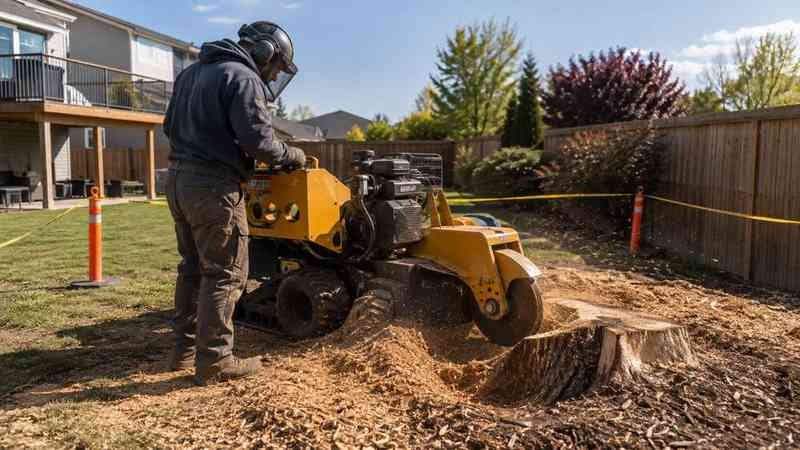
Stump grinding is a great option for reducing unwanted above-ground material without excavating a root mass. A stump grinder works the wood and flare of the stump down into small grindings below the level of the surrounding grade, removing this impediment from the site to prepare it for other work.
- Why Property Owners Choose Stump Grinding
- Removal of a tripping hazard or mowing obstruction
- Opening lawns, gardens, or other projects to new construction or landscaping
- Eliminating the visible portion of a removed tree
- Clearing multiple stumps for a larger project
- Improving access along a fence, driveway edge, or in a restricted area
- Preparing a portion of the site for a future project without full excavation

Stump Grinding vs. Full Stump Removal
Stump grinding and stump excavation address the same issue from different angles and are chosen based on the needs and goals of the property owner.
Grinding reduces the in-situ presence of a tree’s stump and flare, while excavation removes a greater proportion of the stump and root mass. The former leaves a hole to be filled or finished depending on the intended use, while the latter leaves a much more excavated and disturbed area. Full stump removal can be more disruptive to the worksite as a whole in comparison to stump grinding and grading.
Stump grinding will generally be the more practical option for removing the visible presence of a stump and preparing the ground for other work. Stump excavation may be preferable when planning large-scale works that will disturb the ground or roots in any case.
When planning stump grinding, keep in mind the intended use of the site after stump reduction.
What We Take Into Account When Planning Stump Grinding
Along with its diameter, we consider the root flare, slope, proximity to hardscape, machine access, utilities, and intended use of the site when planning stump grinding. The desired end result guides the operation, since a stump ground down to facilitate mowing will require a different scope than one to be removed in preparation for a new hardscape.
We consider whether groundings will be left, spread, piled, or removed as part of the stump grinding cleanup so you know what to expect when the work is done.
How We Do Stump Grinding
1. Inspection
We look at the stump’s diameter, height, flare, species, decay, and the surrounding grade, rocks, fences, buildings, patios, and other barriers before beginning. Surface roots can affect the width of the area needed to grind the stump.
2. Access
A stump grinder has to be able to reach the stump, so we look at the access, including gate width, slope, soft ground, retaining edges, steps, and side yards, to the worksite. An open front yard presents a different set of conditions from a stump located behind a narrow gate or alongside a fence and outbuilding.
3. Clearing
We clear the area around the stump of loose materials and obstacles before beginning the grind. We also observe underground utilities if the work will affect the grade. Property owners should mark any irrigation, landscape lighting, gas, electric, or other lines at the worksite and note any local ordinances about digging and underground utilities if applicable.
4. Grinding
We grind the stump down, removing wood in passes until we’ve reached the desired depth for the site. This depends on the intended end use and scope of stump grinding.
A stump being reduced to facilitate mowing, for instance, will be treated differently from a stump being prepared for a new planting bed.
5. Grindings and Finishing
Stump grinding produces a mixture of wood chips, finer grindings, and soil from the stump and the area around it. This material can sometimes be left or spread as part of the stump grinding process depending on your project needs and cleanup preferences. If backfilling or other finishing is necessary for the site it should be noted as part of the stump grinding service or otherwise arranged beforehand.
How Deep Does a Stump Need to Be Ground?
There’s no universal answer, because each stump’s needs are dictated by its intended end use. A stump ground merely to allow mowing will have different requirements from one that needs to be excavated for new construction. The shape of the stump plays a role here as well; the flare of some trees’ roots spreads out well beyond their trunk diameter, requiring a larger work area than the width of the trunk suggests.
Ask about the inclusion of flare and surface roots if they’re a consideration for your project.
What Happens to the Roots After Stump Grinding?
With standard stump grinding, the majority of a tree’s roots are left in place. They’ll gradually decay in situ over time. Large surface roots can sometimes be ground along with the stump in accessible areas if the work scope allows and the location doesn’t prohibit it, but this should be discussed separately from stump grinding itself.
This is an important distinction if plans call for building, hardscaping, utility trenching, or another tree to be planted directly over the roots of a previously ground stump.
What Happens to the Wood Chips?
Stump grinding can produce more material than you might expect; a large stump will result in a correspondingly large pile because the grinder is essentially turning solid wood into loose chips and mixing in some soil for every pass over the stump.
The grindings can frequently be left or spread in an area of your choosing as part of the stump grinding service. However, fresh wood chips should not be relied upon to serve as topsoil or growing medium; if planting is desired after stump grinding, additional amendments may be necessary after the chips have been removed.
Using the Area After Stump Grinding
The most practical use depends on your plans for the space. If there are intentions to use the area for lawn, loose chips will need to be removed and replaced with appropriate growing medium before laying sod or overseeding.
Similar considerations apply to planting beds and other areas where native soil or amendments will be necessary after stump grinding. If the space is to be used for a patio, driveway, or other construction, stump grinding alone may not be sufficient to the project needs; additional excavation or grading may be necessary after stump grinding is finished.
It’s a good idea to let the stump grinding service provider know your ideas for the area before grinding begins. “Make it go away” and “Prepare this site for construction” are two very different requests with very different costs and scopes.
Stump Grinding in Hard-to-Reach Places
Backyard stumps tend to present more challenge in terms of access than most other obstacles to mowing or gardening. Fences, gates, outbuildings, patios, irrigation features, retaining walls, garden beds, and slope can conspire to make a stump inaccessible to standard grinding equipment.
It can be helpful to measure the most narrow access to a stump before stump grinding services are scheduled to determine if a smaller machine might be able to reach it. Options include using a different access point or removing a small section of fencing or edging if necessary to complete the job.
It’s important to keep in mind that a stump can’t be ground if it can’t be reached. Always confirm accessibility before stump grinding services are scheduled.
Multiple Stumps, Larger Projects
It can be helpful to request stump grinding services for multiple stumps at the same time; individual stumps are frequently scheduled together based on size, location, access, and disposal needs. Multiple stumps scattered across a large property have different requirements from those found close together or near structures and other hardscape.
When stump grinding is part of a larger project to clear land for construction, excavation, or another purpose, the Land Clearing page may be a better option, since it takes into account not only trees and stumps but also brush, other debris, and the desired end condition of the site.
Stump Grinding and Underground Utilities
Since stump grinding can disturb the grade of the ground, it’s especially important to take into account underground utilities when planning stump grinding. NorthWestern Energy recommends calling 811 before any digging project to mark the approximate location of underground power lines; a similar process exists for other utilities. This is also a good time to mark irrigation, landscape lighting, and other features that may not be obvious from the surface.
Never assume that a utility isn’t present based on what you can see aboveground.
Before stump grinding begins, we determine the details that need special attention based on the worksite and the needs of the customer. If a fence post or other object prevents access to one side of the stump, it will affect what can be done on the other sides and the final condition of the ground after stump grinding is finished.
Stumps close to hardscape present additional technical challenges because the grinder has to work around objects like concrete, metal, and stone without damaging them. Roots frequently run under hardscape even when the visible portion of the stump doesn’t extend beneath it.
Stumps Near Fences, Patios, Driveways, and Other Hardscape
It’s usually a matter of practicality when determining what to do with a stump near a fence, patio, driveway, or other hardscape. What the property owner intends to do with the area will dictate the project, since a similarly sized stump embedded in a lawn, garden bed, or along a fence line or in the middle of a future building site will all have different requirements.
Certain tree species have the potential to throw off new shoots from their stump or roots after the main trunk is removed. Grinding the stump can reduce the likelihood of this occuring, since it removes the primary source of nutrients and growth hormones for would-be sprouts, but it’s unlikely to prevent all growth entirely if there are healthy roots nearby.
If the stump or roots are already putting out shoots, mention this when requesting stump grinding service so that it can be taken into consideration when planning the project scope.
Can a Stump Sprout Again After the Tree is Cut?
Yes, some tree species can produce new sprouts from the stump or surrounding root system after the trunk has been cut, particularly species that are naturally inclined to sucker or regrow from remaining root tissue. This regrowth draws on stored energy in the roots and typically shows up as thin shoots near the base of the stump or along nearby surface roots.
Stump grinding significantly reduces the chances of this happening because it removes the growth points and much of the stored energy in the stump itself, but it does not eliminate the root system entirely. Property owners dealing with a species known for suckering should expect to monitor the area for a season or two after grinding and may need to trim any new shoots that appear until the remaining roots fully break down.
What Determines the Cost of Stump Grinding?
The cost of stump grinding is determined by a combination of the amount of wood to be ground, the difficulty of the access, and the desired end result. A small, rotted stump in an open yard is much simpler and cheaper to grind than a large, healthy stump with a wide flare behind a narrow gate. The following factors will affect the cost:
- Stump diameter and height above grade
- Root flare width and visible surface roots
- Density of the stump wood and its condition
- Number of stumps
- Gate size and access
- Slope, obstacles, soft ground, and proximity to hardscape
- Distance from fences, structures, patios, and utilities
- Desired depth of grinding and any treatment of surface roots
- Whether grindings will be left, spread, or removed
- Whether backfill or other site finishing is required
Stump Grinding After Tree Removal
Stump grinding can be performed in conjunction with tree removal, but it’s frequently preferable to treat them as two separate jobs. The tree removal crew may leave the stump at a lower height than is desirable for grinding, or the grinding may need to be finished at a different time of year if the roots are too brittle for excavation. If you have both tree removal and stump grinding, ask for both services to be priced separately when you request an estimate.
For more information about tree removal, please see Tree Removal in Billings. Stump grinding estimates focus on the portion of the tree remaining at ground level: the stump, flare, access, grindings, and cleanup, as well as what you intend to do with the area after stump grinding is completed.
Stump Grinding in Billings, MT
Our properties in Billings range from smaller yards to larger homes with more space, so stump grinding jobs can vary widely in scope. However, the same basic set of questions apply to every stump: How big is it? Can we get to it? What’s around it? And what do you want to do with it when it’s gone?
Use the form below or give us a call to schedule stump grinding or stump removal services for your Billings area property.
Frequently Asked Questions
Is stump grinding worth the money?
Stump grinding removes hazards, improves appearance, and creates usable yard space.
Does stump grinding remove all roots?
Grinding removes the visible stump and reduces remaining underground material.
How deep does stump grinding go?
Depth depends on equipment and project requirements.
Will grass grow after stump grinding?
Yes, after proper soil preparation.
What happens if I leave a stump?
Stumps can create trip hazards, attract pests, and interfere with landscaping.
Request Tree Service in Billings, MT
Call for tree service help or use the estimate form on our Contact page. Combine stump grinding with tree removal for a complete job.
Get a Fast, Free Estimate
Tell us about the job and we will get back to you.