
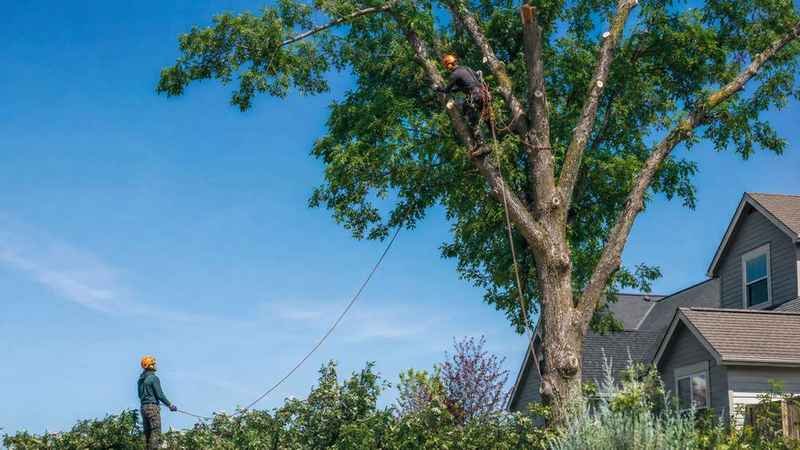
Tree Trimming & Pruning in Billings, MT
Tree trimming and pruning in Billings, MT for dead, damaged, overgrown, or misplaced branches. Improve clearance, structure, and practical tree management.
We provide tree trimming and pruning in Billings, MT for deadwood, broken branches, roof and driveway clearance, structural improvement, storm damage, overextended limbs, and other branch problems where the tree can remain. The emphasis is on making thoughtful cuts rather than taking off as much canopy as possible. Our pruning plans are always rooted in what you want and what the tree can realistically handle.
Our pruning plans always start with your goals and what the tree in question can realistically handle. We take species, age, branch structure, defects, nearby objects, time of year, access, and long-term goals into account before suggesting a scope of work.
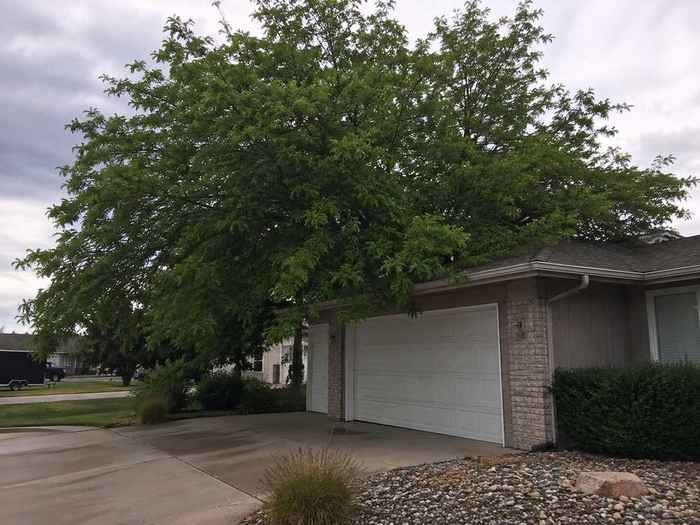 BEFORE
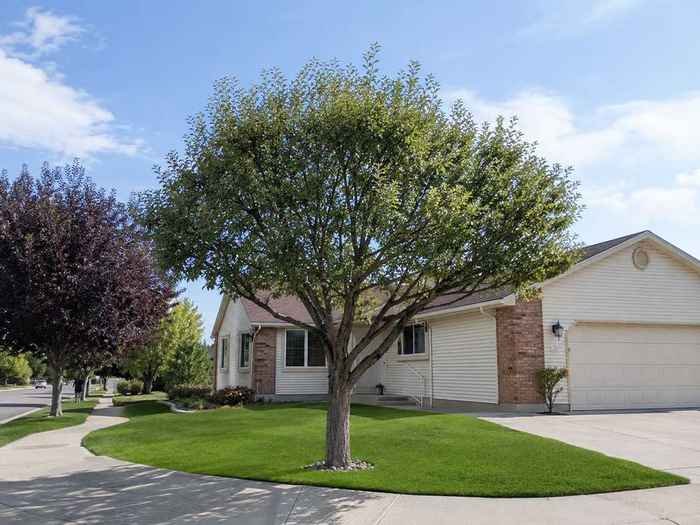 AFTER
AFTER
Pruning Has A Purpose
Tree trimming and pruning are most effective when they begin with a goal in mind. Taking off a dead branch, making a roof clearance, correcting a structural deficiency, reducing the leverage of an overextended limb, or shaping a young tree are each very different objectives. They may involve removing some branches, but the branch selection, placement, and amount removed should be dictated by the reason for the work.
A good pruning plan always keeps the whole tree in view. Taking off more canopy because it looks “full” can create new problems. Leaving a branch with poor attachment intact can leave you with a future hazard. The more important question is not “How much can I cut?” but “Which branches should I remove or reduce, and why?”

Tree Trimming Vs. Tree Pruning
Tree trimming and pruning are often used interchangeably, but there’s a reason for distinguishing between the two. In short, trimming focuses more on general branch management, whereas pruning suggests a more specific goal. The difference between the two is often one of perspective, but it can be helpful to understand what each word implies. For a homeowner, it’s often less important to distinguish between the two and more important to describe what you want the tree to look like and how it should function.
Dead branches overhanging your yard, branches contacting your roof, crossing branches, a young tree with too many leaders, or branches extending over a driveway are all examples of branch problems. Each one suggests a type of pruning, but they’re all variations on the theme of branch management.
Common Reasons Trees Need Pruning
Deadwood and broken branches
Dead branches should be removed since they’re no longer contributing to the tree’s health and can become a hazard as they decay or fall off. Broken branches should also be removed if they pose a hazard. If a branch breaks cleanly and remains attached, it should be considered for removal since it could fail completely and cause damage.
Crossing and rubbing branches
Branches that are rubbing against each other can damage the bark, creating wounds that invite insects and disease. The same goes for branches that compete for space, and the branch with the poorer structure should be removed to allow the other to grow.
Weak or poorly formed structure
Trees, especially young trees, often benefit from corrective pruning that improves structure and branch spacing. Trees of any age should have long, heavy branches that fail to clear structures or are poorly attached to the trunk removed.
Clearance problems
Branches can grow into and overhang a roof, gutter, siding, driveway, walkway, sign, window, fence, or other structure. Clearance pruning should always be done to maintain as much desirable canopy as possible while eliminating hazards.
Storm-damaged branches
Strong winds or heavy snowfall can break branches without killing the tree. The failed branches should be removed, and the tree’s structure should be assessed to determine if it can remain.
Pruning Objectives: What The Work Is Trying To Accomplish
Pruning objectives should always be clearly defined. Common objectives include:
- Removing dead, broken, or damaged branches
- Improving branch spacing and reducing rubbing or competition
- Correcting structural problems in young trees
- Reducing weight and leverage on a specific limb
- Creating clearance around a roof, building, driveway, or other structure
- Removing obstruction or interference with visibility
- Managing size or direction without indiscriminate cutting
- Addressing storm damage without removing too much of the canopy
What Good Pruning Service Should Accomplish
We always prune with a specific objective in mind. Common objectives include removing dead or broken branches, creating clearance, reducing branch competition, reducing the leverage of an overextended limb, or improving the structure of a young tree.
The amount of pruning should always be appropriate for the tree and the objective. Too much pruning can weaken the tree, and too little pruning accomplishes nothing. We always consider cleanup and access when planning pruning work since large trees can produce a surprising amount of debris, and the cleanup should be considered when developing a scope of work.
How Tree Trimming & Pruning Works
1. Look at the tree from the ground
The first step in tree trimming and pruning is looking at the tree from the ground. The tree’s height, crown shape, trunk structure, branch attachment, deadwood, nearby objects, access, and objective all play a role in determining what can and should be done. A branch that looks like it should be removed from one angle might be necessary for balance from another.
2. Define the pruning goal
“Trim the tree” is not an objective. The goal should be defined before any pruning work begins. The objective might be as simple as making a clearance or removing dead branches, or it might be more specific, such as reducing the weight on a particular limb. Defining the objective is important since it will define the scope of work.
3. Select branches and cut points
Pruning should always be selective. The cut points should be chosen based on the objective since they’ll determine how much weight the remaining branches will carry. Larger cuts have a more significant impact on the tree’s health and structure than smaller cuts, so they should always be considered with care.
4. Perform the work with access and property conditions in mind
Tree trimming and pruning can be done from the ground or from above. The height and access to the tree will dictate whether the work can be done from the ground or if climbing or aerial lifts will be necessary. Trees near a roof, fence, garden, or other structure may need to have branches lowered rather than removed.
5. Process branches and clean the work area
Tree trimming and pruning always produce debris that must be removed from the work area. The cleanup should be considered when developing a scope of work since large trees can produce an astonishing amount of debris, and the cleanup can add significantly to the cost.
Structural Pruning For Young Trees
Trees are easier to manage when they’re young, so structural pruning should begin early. This type of pruning encourages good structure, reduces competition, and removes poorly attached branches. The tree should not be topped or have more than necessary removed since that can weaken the tree and encourage poor regrowth. It should be noted that young trees should always be pruned conservatively since they’re growing and will change over time.
There’s no single structural pruning guideline that works for every species, so it’s essential to consider the tree’s needs. Trees have different structural requirements based on age, species, current structure, projected height and spread, and the space available.
Pruning Mature Trees
Mature trees should be pruned conservatively since large branches carry more weight, and removing too much canopy at once can stress the tree. Live branches should always be removed judiciously to maintain good structure and reduce hazards. Dead branches, limb reduction, and clearance pruning are often the priorities when pruning a mature tree. The tree’s structure should also be considered when deciding whether to reduce the length of a branch or remove it entirely.
Long, heavy limbs over a roof or driveway should always be reduced when possible rather than removed since a lateral branch is often needed to reduce the weight. Reduction cuts should always be made to branches with good structure and attachment. The same branch should not be topped since that encourages poor regrowth. The appropriate action will always depend on the branch and the objective.
Why Tree Topping Is Different From Planned Pruning
Topping is different from pruning since it usually involves removing large amounts of live growth indiscriminately. It also leaves stubs that can encourage dense regrowth around the cut area. Topping should always be avoided since it creates weak branch attachments that can fail later. Trees that have been topped should always be evaluated to see if they can be brought back to a healthy structure.
If the tree has outgrown the space it was planted in, topping might not be a viable option. In some cases, the tree may need to be removed and replaced with a smaller tree species.
Timing Tree Pruning In Montana
Pruning is often recommended during the tree’s dormant season, which is typically late winter through early spring in Montana. Dormant pruning can help reduce hazards since branch structure is often more apparent, and it can reduce some pests and diseases that target fresh cuts.
It’s also important to consider the tree’s requirements. Trees that flower or bear fruit should be pruned right after blooming, whereas trees that bleed should be pruned before the sap flows. Trees affected by disease or insects often have specific pruning requirements as well. The objective should always be considered when determining the best time to prune since removing large amounts of live growth can stress the tree.
Clearance Around Homes, Roofs, Driveways, And Walkways
Clearance pruning is often necessary to manage branches around a home, roof, driveway, or walkway. This type of pruning is often requested when the tree and building grow into each other, creating hazards. The branch should be removed so that it clears the obstacle with as little canopy loss as possible.
Branches near power lines should always be considered a special case since they can be extremely hazardous. Customers should never attempt to prune near power lines, and NorthWestern Energy has specific vegetation management guidelines for trees and power lines.
Can Pruning Improve Tree Health?
Pruning can help improve tree health by removing dead, damaged, diseased, or poorly attached branches, but it’s not a cure-all for tree problems. Yellowing leaves, branch dieback, cankers, insects, root issues, and weather damage often require additional evaluation before any pruning can begin. Pruning healthy branches will not improve the health of a tree with other issues.
The best pruning always has a structural or maintenance goal in mind. If the tree’s problems are outside the scope of pruning, it may need to be evaluated by an arborist.
When Pruning Is Not Enough
Sometimes pruning is not enough to bring a tree back to acceptable health or structural integrity. Trees with extensive trunk or root damage, branch failure, or poor structure should always be evaluated. If a tree can’t be safely pruned, it should be removed. If a tree is failing and needs to be removed, review Tree Removal In Billings. If the tree is failing and creating an immediate hazard, review Emergency & Hazardous Tree Removal.
This way, a pruning page is not also serving as a tree removal page, and the customer is not surprised when told that the tree needs to be removed.
Routine wound paint is not a substitute for proper pruning. If a tree has disease or pest problems that require special pruning procedures, time of year, and treatment should always be dictated by species-specific guidelines rather than general assumptions. Wound paint should never be applied to a freshly cut branch since it can interfere with the tree’s natural healing process.
The branch should be cut back to the appropriate attachment point rather than left as a long stub or cut flush with the trunk. The objective is always to have a clean cut at the desired attachment rather than a stub or flush cut.
Pruning Cuts, Stubs, And Wound Treatments
This is another reason why a percentage is not always the best way to describe a pruning job. If the objective can be accomplished by selectively removing a few branches, additional live growth should not be removed to “make it look better.” Large trees should always be pruned conservatively since they’re weakened by the loss of canopy.
A good pruning plan will always be selective rather than aggressive. The amount of live growth that can be removed safely depends on the tree’s species, age, condition, time of year, and the size of the branches being removed. A young healthy tree will handle branch loss differently than an older tree that’s already struggling with drought, root damage, construction, or other stresses.
How Much Of The Canopy Should Be Removed?
Branches that grow across a fence or property line can cause clearance problems, but the tree may be rooted on one side of the fence. Before attempting to prune near a property line, the ownership of the tree and the desired clearance should be established. The branch can often be shortened to clear the fence without removing the canopy back farther than necessary on the tree’s side of the fence.
Pruning Around Neighboring Property And Shared Boundaries
Branch cleanup can be an essential part of a pruning job, especially on larger jobs. Always ask whether the brush should be chipped, whether large branches should be removed, and whether any wood should be left on the property. If the job is being done over garden beds, lawns, or other delicate areas, ask how the branches and logs will be removed since it may not be practical to drag them through such areas.
A clean work area is always important, but it’s especially important when pruning near walkways. Smaller cut branches and twigs can often be left on the lawn, but they should never be left in a walkway.
What Affects Tree Trimming Cost?
The cost of tree trimming and pruning is always dictated by the tree, the objective, and the difficulty of the job. A small ornamental tree that’s easily accessed is not going to cost as much as a large tree with branches over the roof or high in the canopy.
- Tree height, canopy spread, and density
- Number of branches to be removed or reduced
- Pruning objective: deadwood, clearance, structural, reduction, or storm damage
- Tree condition and potential hazards
- Need for climbing, aerial access, rigging, or controlled lowering
- Proximity to roofs, fences, driveways, utilities, and property lines
- Slope, gate size, and access
- Amount of brush to be chipped or removed
- If multiple trees are to be trimmed or pruned
Tree Trimming In Billings, Montana
Billings Parks & Recreation has a cyclical pruning schedule for trees in the city’s park system. In short, tree maintenance should always be a cyclical process rather than an occasional event. Trees on private property should be maintained in the same way, but the schedule can vary depending on the tree’s needs.
Local wind, snow, dry periods, new development, and tree growth all play a role in determining when and how trees should be pruned. The tree should always dictate the schedule, and the pruning should have a specific objective.
Use the form below or call to request tree trimming or pruning for a Billings-area tree.
Frequently Asked Questions
What is the difference between tree trimming and pruning?
Trimming focuses on clearance and appearance, while pruning focuses on tree health and structure.
When should trees be pruned in Montana?
Timing depends on tree species, health, and pruning goals.
Can pruning prevent tree removal?
Proper pruning can reduce risks but cannot repair severe structural problems.
How often should trees be trimmed?
Frequency depends on species, age, growth rate, and location.
Can I trim large trees myself?
Large tree trimming requires professional equipment and safety knowledge.
Request Tree Service in Billings, MT
Call for tree service help or use the estimate form on our Contact page. See Emergency & Hazardous Tree Removal if a tree is failing rather than in need of routine pruning.
Get a Fast, Free Estimate
Tell us about the job and we will get back to you.